Below you will find links to the Class Rules for both DF classes as well as a link to the Rules Committee and the interpretations that they make and how the process is conducted.
DF65 Class Rules –
DF95 Class Rules –
DF65/DF95 Class Rule Changes – December 2023
Measurement Committee Rationale
Class Rules Change 1 of 3: Hull Fairing, Sanding and Painting
Introduction:
The Founders’ Statement of the DF65/DF95 radio sailing classes envisions a level playing field where enthusiasts can take a brand-new boat from its box, assemble it according to the rigging guide, and be immediately competitive. This is the spirit upon which our class was built, emphasising skill, strategy, and camaraderie over equipment modifications. This ethos promotes inclusivity and ensures that the majority of customization remains largely cosmetic, such as sail designs, colours, and stickers.
Issue:
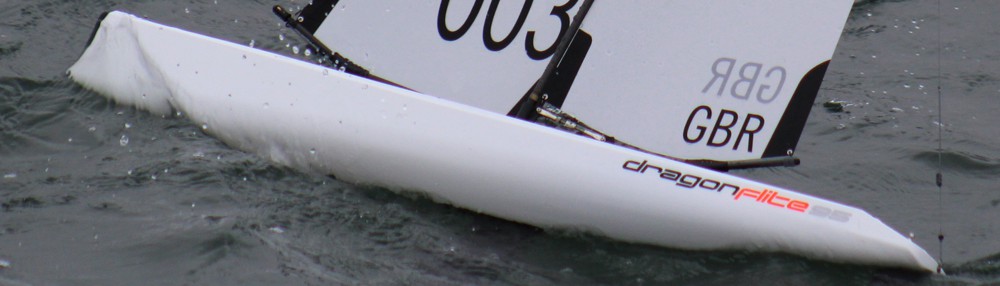
While the decoration of a hull through painting aligns with our vision, there’s a fine line between aesthetics and performance modification. We have noticed that in recent national and international events, several boats exhibited smoothed and faired hull surfaces, veering away from the standard box conditions. This naturally raises concerns about performance advantages (perceived or otherwise) and opens the door to potential disparities between boats in the fleet, and the risk of protest.
Decision:
After thorough deliberation, the Measurement Committee has determined that to preserve the intent of the Founders’ Statement and to keep the focus on sailor skill rather than boat modification, fairing and sanding of hulls to improve performance will not be permitted. This decision minimises ambiguities and helps to ensure that all boats, whether brand new or seasoned, remain competitive on equal grounds.
For boats that have already been repainted with a sanded finish, they can be brought back into compliance with the new class rules by the application of a clear, unsanded gloss coat, acknowledging the time and effort put in by their owners. However, we urge all sailors to keep the spirit of the class in mind and avoid further modifications that deviate from the out-of-box conditions.
It’s worth noting that personal touches to assist in boat identification, like the application of ink, paint, or stickers, remain not only permissible but also encouraged, as indicated in Rule C2.
Rationale:
- Uphold Founders’ Vision: Our class is built on the vision of equal competition, where skill is the primary differentiator. Modifying hulls to improve perceived performance detracts from this vision.
- Minimize Ambiguities: Clear, definitive rules ensure that sailors know exactly what’s allowed and what’s not, preventing potential disputes during competitions.
- Encourage New Participants: By ensuring that newly purchased boats are just as competitive as their counterparts, we encourage newcomers to join the class without fear of being at a disadvantage.
In conclusion, while we celebrate innovation and the spirit of improvement, we believe this decision will uphold the integrity of the DF65/DF95 classes. We appreciate the community’s understanding and support as we implement these changes.
Class Rules Change 2 of 3: Winch Elastic Return Line Routing
Introduction:
The DF65/DF95 radio sailing classes are steadfast in their commitment to providing clear, consistent, and equitable rules that cater to the real-world experiences of sailors. Regular reviews of our class rules, informed by feedback and observations, play a crucial role in upholding the spirit and fairness of our competitions.
Issue:
Ambiguity has been noted regarding the routing of the winch elastic return line in both DF65 and DF95 classes. Differing rigging guides or notes often depict alternate method of rigging the which line elastic (e.g. trough a bridle deckeye or not), leading to uncertainties during measurements at events.
Decision:
To bring coherence to the rule and diminish confusion, the Measurement Committee has made the following resolution for both DF65 and DF95 classes:
The winch elastic return line can be routed through any, or none, of the deck eyes. This choice is rooted in the belief that such a variation does not confer any performance advantage, ensuring that fairness and competitiveness are maintained across the board.
Rationale:
- Consistency with Rigging Guides: By allowing flexibility in routing through any of the deck eyes, we ensure that sailors across both classes can adhere to their chosen or provided rigging guides without facing discrepancies during measurements.
- No Performance Advantage: Based on extensive evaluations and feedback from both classes, the change in routing of the winch elastic return line through different deck eyes, or none, does not create a performance differential. This rule alteration is purely for convenience and clarity.
Pragmatic Approach:The DF65/DF95 classes prioritise the adoption of rules that resonate with real-world sailing scenarios. This adjustment is a testament to that ethos, ensuring that minor rigging differences don’t result in undue complications.
In conclusion, this rule change is an effort to streamline processes for our sailors while conserving the competitive essence of the DF65/DF95 classes. We are thankful for the understanding and collaboration of our community, and we continually strive to enhance the experience for all members.
Class Rules Change 3 of 3: Removal of Flows Stripes or Draft Lines Specification
Introduction:
The DF65/DF95 radio sailing classes continually strive to clarify and simplify our rules to align them with the real-world experiences and understandings of our sailors. We aim to keep the essence of the sport intact while ensuring that rules are not overburdensome or prone to varied interpretations.
Issue:
A prior specification in our class rules referenced the inclusion of “flow stripes”, “speed stripes” or “draft lines” on sails, with a stipulation that they be a maximum of 10mm. The distinction between these lines and decorative elements on sails has been found to be nebulous, leading to potential confusion and subjective judgments.
Decision:
The Measurement Committee, after careful evaluation, has decided to remove the 10mm maximum stroke thickness on “flow stripes” or “draft lines” from the rules for both the DF65 and DF95 classes.
Our assessment concludes that distinguishing between flow stripe and decorative or distinguishing stripes is very difficult. These elements are not significantly performance-affecting. Moreover, by omitting this rule, we aim to prevent ambiguities and simplify the interpretation and application of our class rules.
Rationale:
- Clarity Over Ambiguity: The thin line between decorative features on sails and speed stripes or draft lines often led to varied interpretations, causing potential disputes. Removing this specification promotes clarity.
- No Proven Performance Advantage: After rigorous evaluations, complete with multivariate meta-analyses spanning numerous regattas, we’ve discovered that these “speed stripes” don’t actually boost a boat’s speed. (Although, they do seem to have a notable edge in post-race pub debates!) Thus, their regulation seems a tad unnecessary.
- Simplified Rulebook & Event Measurement: By eliminating rules that don’t impact the core of the sport, we ensure that our rulebook and measurement process remains streamlined and more easily digestible for sailors of all experience levels.
In conclusion, this modification to the rules is intended to create a more straightforward, clear, and consistent experience for all DF65/DF95 class sailors. As always, we appreciate the community’s cooperation and commitment to upholding the spirit of our beloved sport
 DF Racing World Information Site